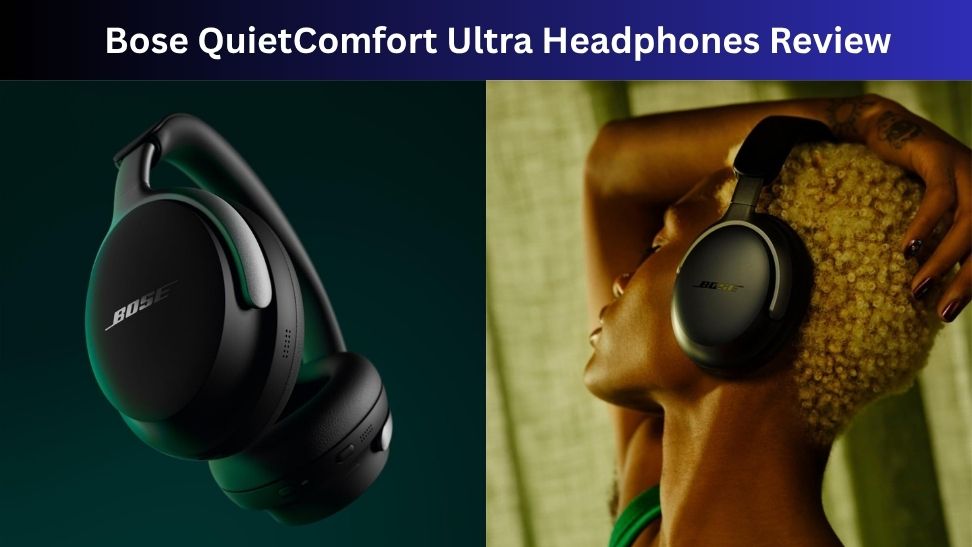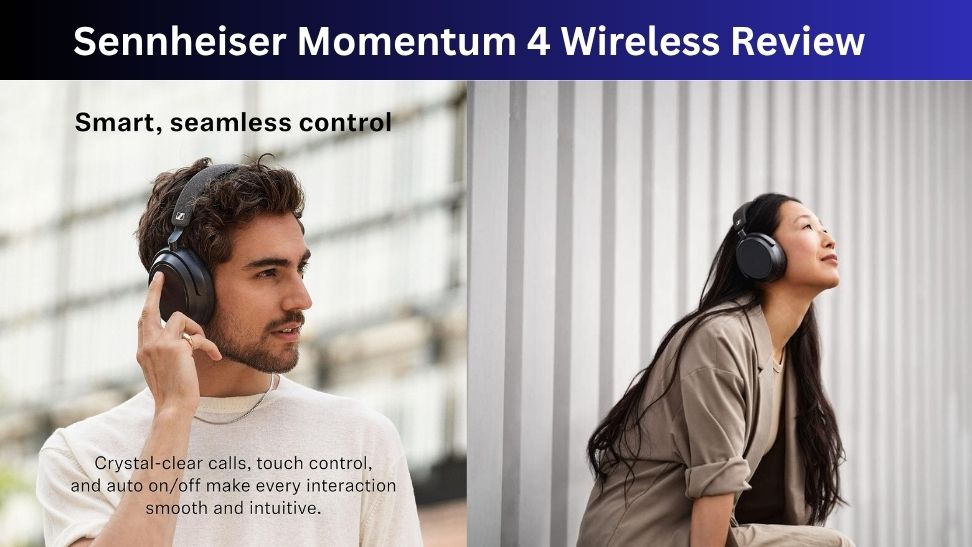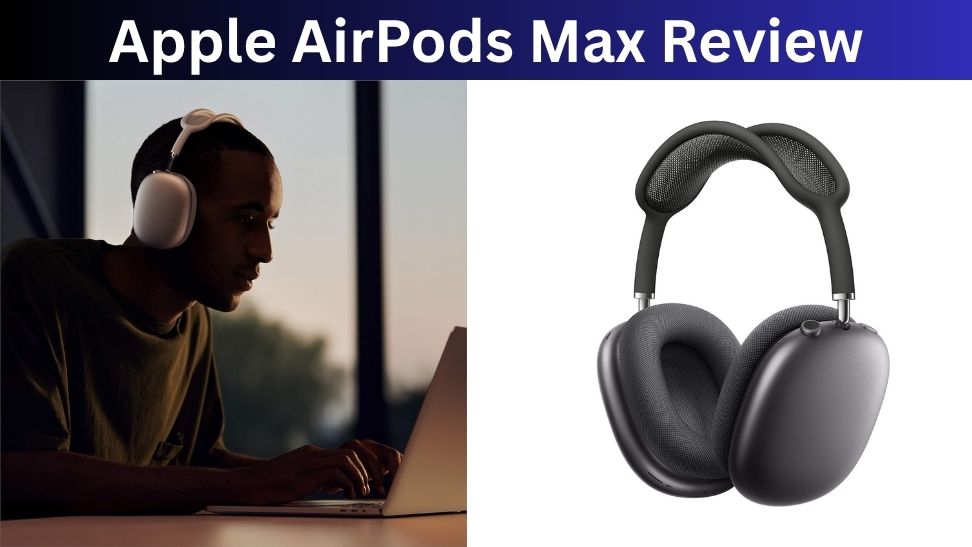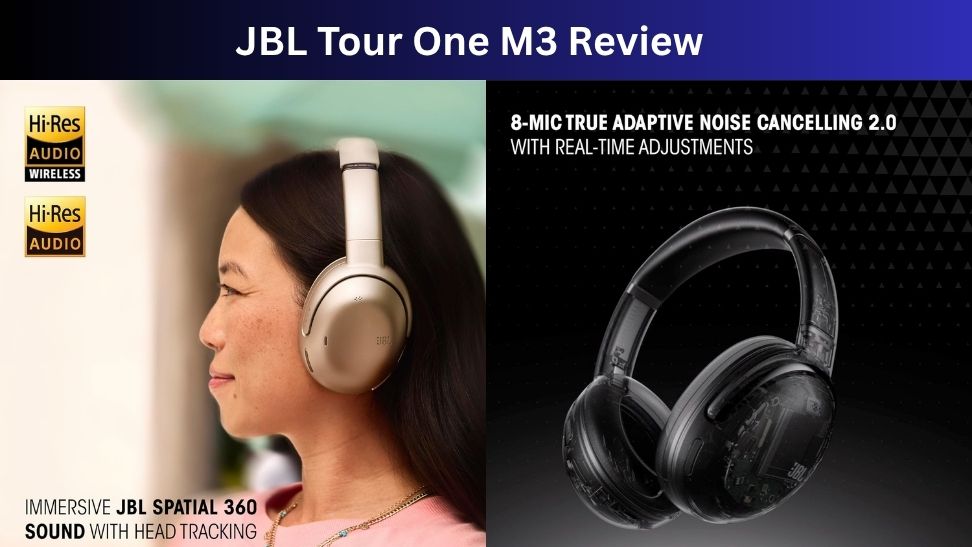
The JBL Tour One M3 is JBL’s flagship over-ear wireless headphone, designed to compete with popular premium models from Sony, Bose, Apple, and Sennheiser.
Instead of focusing on just one feature, JBL has packed the Tour One M3 with almost everything you could want from a modern pair of wireless headphones. You get adaptive noise cancellation, high-resolution audio, spatial sound with head tracking, multipoint connectivity, advanced call features, and an impressive battery life.
But having a long feature list doesn’t automatically make a headphone worth buying. The real question is whether the Tour One M3 delivers where it matters most: sound quality, comfort, noise cancellation, battery life, and everyday usability. For buyers looking for a feature-rich alternative to Sony and Bose, the Tour One M3 is a very interesting option.
JBL Tour One M3: Quick Verdict
Rating: 4.5/5
The JBL Tour One M3 is an excellent premium wireless headphone with powerful sound, strong battery life, advanced ANC, and plenty of customization options.
Its biggest strengths are its 70-hour battery life, detailed sound, adaptive noise cancellation, LDAC support, and impressive collection of smart features. The main downside is that JBL’s feature-heavy approach can feel more complicated than simpler competitors.
Best for: Travel, music, work and everyday listening
Not ideal for: Buyers who want the absolute simplest headphone experience
Verdict: A powerful premium headphone with an excellent combination of sound, features, and battery life.
Design and Comfort
The Tour One M3 uses a fairly traditional over-ear design with large ear cups and a padded headband. It doesn’t have the distinctive appearance of Apple AirPods Max, but the understated design makes it suitable for both travel and professional environments.
At around 278 grams, the headphones are reasonably lightweight for a full-size wireless ANC model. JBL also includes a carrying case, making them easier to take on flights or daily commutes.
The ear cushions are designed for long listening sessions and provide a good seal around the ears. Like most closed-back headphones, however, they can become warm after several hours, especially in hot weather. Overall, the Tour One M3 strikes a good balance between portability and comfort.
Sound Quality
Sound quality is one of the strongest reasons to consider the Tour One M3.
JBL uses 40mm dynamic drivers and tunes the headphones to deliver strong bass, balanced mids, and clear highs. The headphones also support high-resolution wireless audio through LDAC. The sound works particularly well with modern music.
Pop, hip-hop, electronic music, rock, and movie soundtracks benefit from the JBL tuning, which gives music plenty of energy without making vocals disappear. For listeners who prefer a different sound signature, the JBL Headphones app provides extensive EQ customization.This is useful because you can adjust the headphones instead of being stuck with the default sound profile.
Noise Cancellation
The Tour One M3 features True Adaptive Noise Cancelling 2.0 with multiple microphones that continuously adjust to the surrounding environment.
The goal is to reduce background noise without requiring you to manually change settings every time your surroundings change. This makes the headphones useful for airplanes, trains, offices, coffee shops, and other noisy environments. JBL also provides different listening modes, including Ambient Aware and TalkThru.
So if you need to hear announcements or have a quick conversation, you don’t necessarily need to remove the headphones. The ANC is a major strength, although buyers who want the absolute best noise cancellation should still compare it directly with the latest Sony and Bose flagship models.
Spatial 360 Sound
One of the more interesting features is JBL Spatial 360 with head tracking.
The system attempts to create a more spacious, speaker-like listening experience rather than keeping everything fixed directly inside your left and right ears. With head tracking enabled, sounds can remain positioned in space as you move your head.
This can be particularly enjoyable for movies and compatible music.It’s not something every listener will want to use all the time, but it’s a useful feature for people who enjoy immersive audio.
Battery Life
Battery life is arguably the Tour One M3’s biggest advantage. JBL rates the headphones for up to 70 hours of playback with ANC turned off and up to 40 hours with ANC enabled.
That’s excellent compared with many premium wireless headphones. Even better, JBL says a five-minute charge can provide up to five additional hours of playback.
For frequent travelers, this can be a major advantage. You can go several days without worrying about finding a charger. The headphones take approximately two hours to fully charge.
Connectivity
The Tour One M3 uses Bluetooth 5.3 and supports modern wireless audio features including LDAC, LC3, and Auracast.
Multipoint connectivity allows you to keep two devices connected simultaneously. For example, you can listen to music from your laptop while remaining connected to your phone for incoming calls.
The headphones also support wired listening through the included USB-C and 3.5mm cable options. One particularly useful feature is the built-in DAC, which allows compatible USB-C connections to deliver lossless audio.
Call Quality and Smart Talk
JBL includes multiple microphones with adaptive beamforming technology to improve voice pickup during calls. The company also provides features such as VoiceAware, allowing you to control how much of your own voice you hear during calls.
The Tour One M3 also includes Smart Talk. When the headphones detect that you’re speaking, they can automatically lower the music and activate the appropriate ambient listening mode.
It’s a small feature, but it can be convenient when you’re working in an office or traveling.
JBL Headphones App
The JBL Headphones app is an important part of the Tour One M3 experience.
You can use it to customize the EQ, control ANC modes, adjust spatial audio settings, manage Smart Talk, personalize sound, and access other features.
JBL’s Personi-Fi 3.0 also allows you to create a personalized listening profile.
This level of customization makes the Tour One M3 more flexible than headphones that only offer basic ANC and volume controls.
JBL Tour One M3 vs Sony WH-1000XM6
The Sony WH-1000XM6 remains one of the strongest competitors. Sony is likely the better choice if your priorities are class-leading noise cancellation, polished software, and a more established premium ANC experience. The JBL Tour One M3, however, has some clear advantages of its own.
Its 70-hour maximum battery life, LDAC support, spatial audio, Auracast, USB-C audio, and extensive customization make it an extremely feature-rich alternative. If you value battery life and features as much as ANC, the JBL deserves serious consideration.
Pros and Cons
Pros
- Excellent 70-hour battery life
- Up to 40 hours with ANC
- Strong overall sound quality
- 40mm dynamic drivers
- LDAC support
- True Adaptive Noise Cancelling 2.0
- Spatial 360 sound with head tracking
- USB-C lossless audio
- Bluetooth multipoint
- Extensive app customization
- Useful Smart Talk feature
Cons
- Feature set can feel complicated
- Ear cups may become warm during long sessions
- ANC may not beat the very best Sony/Bose models
- Premium price
- Large over-ear design isn’t ideal for everyone
Who Should Buy the JBL Tour One M3?
The Tour One M3 is a great choice for people who want premium wireless headphones with lots of features.
They’re especially suitable for travelers, music lovers, remote workers, students, and people who frequently switch between a phone and laptop.
They’re also a strong option if battery life is important to you.
Who Should Skip It?
You may want to consider Sony or Bose if your only priority is getting the strongest possible noise cancellation.
You might also prefer a simpler headphone if you don’t care about spatial audio, EQ customization, Auracast, or other advanced features.

Final Verdict
The JBL Tour One M3 is one of JBL’s most ambitious wireless headphones. It combines strong sound, excellent battery life, adaptive noise cancellation, LDAC, spatial audio, USB-C lossless playback, multipoint connectivity, and a long list of smart features.
Its biggest advantage is versatility. It can work as a travel headphone, office headphone, music-listening headphone, and entertainment device without feeling limited to one particular use.
The biggest competition comes from Sony and Bose, particularly if noise cancellation is your number-one priority. But if you want long battery life, powerful sound, modern connectivity, and plenty of customization, the JBL Tour One M3 is an excellent premium headphone to consider in 2026.
Topgadgets.online is a participant in the Amazon Services LLC Associates Program, an affiliate marketing program that enables website owners to earn referral commissions by linking to products available on Amazon.com and related Amazon marketplaces.